Course curriculum

    1. Planning Your Crayfish Survey

    2. Homework Assignments

    3. Planning Your Crayfish Survey Q&A

    4. Planning Your Crayfish Survey Quiz

    1. Undertaking Your Crayfish Survey

    2. Undertaking Your Crayfish Survey Q&A

    3. Undertaking Your Crayfish Survey Quiz

    1. Crayfish Conservation & Management

    2. Crayfish Conservation & Management Q&A

    3. Crayfish Conservation and Management Quiz

    1. Signal Crayfish Virtual Symposium

    2. American Signal Crayfish: England Case Study

    3. Can Fish Help Us Control Signal Crayfish?

    4. Barriers to Stop the Spread of Invasive Crayfish

    5. Genetic 'Immunisation' of Invasive Species

About this course

  • £30.00
  • 5.5 hours of video content

Checklist

Include a list of items to support the central theme of your page. Bulleted lists are a great way to parse information into digestible pieces.

  • Understand how to plan crayfish surveys by evaluating objectives, habitats, legislation, and appropriate survey methods.

  • Explore best-practice approaches to conducting crayfish surveys, including trapping techniques, data collection, and biosecurity protocols.

  • Interpret crayfish survey data to inform conservation planning and management of native and invasive species.

  • Compare invasive crayfish control methods through case studies to support evidence-based decision-making in conservation.

Ecology tutor

Nicky Green

Crayfish Specialist

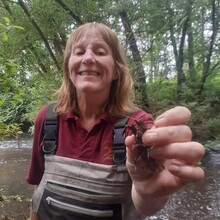
Dr Nicky Green has been working with crayfish since 2003 and has recently completed a PhD on the control of American signal crayfish. As well as white-clawed crayfish survey and conservation work she researches practical and effective methods to control invasive crayfish. Nicky has worked with white-clawed crayfish in Devon since 2003 and on Exmoor and elsewhere since 2015 trialling new and innovative techniques.

Start learning about crayfish today!

Skills For Ecology

Our Skill For Ecology webinars focus on technical skills useful in ecology and conservation roles, such as use of technology, field surveying, species identification and practical conservation skills.